
 As an Amazon Associate, we earn from qualifying purchases.
The DeskCycle 2 review: do under-desk cycles really work?
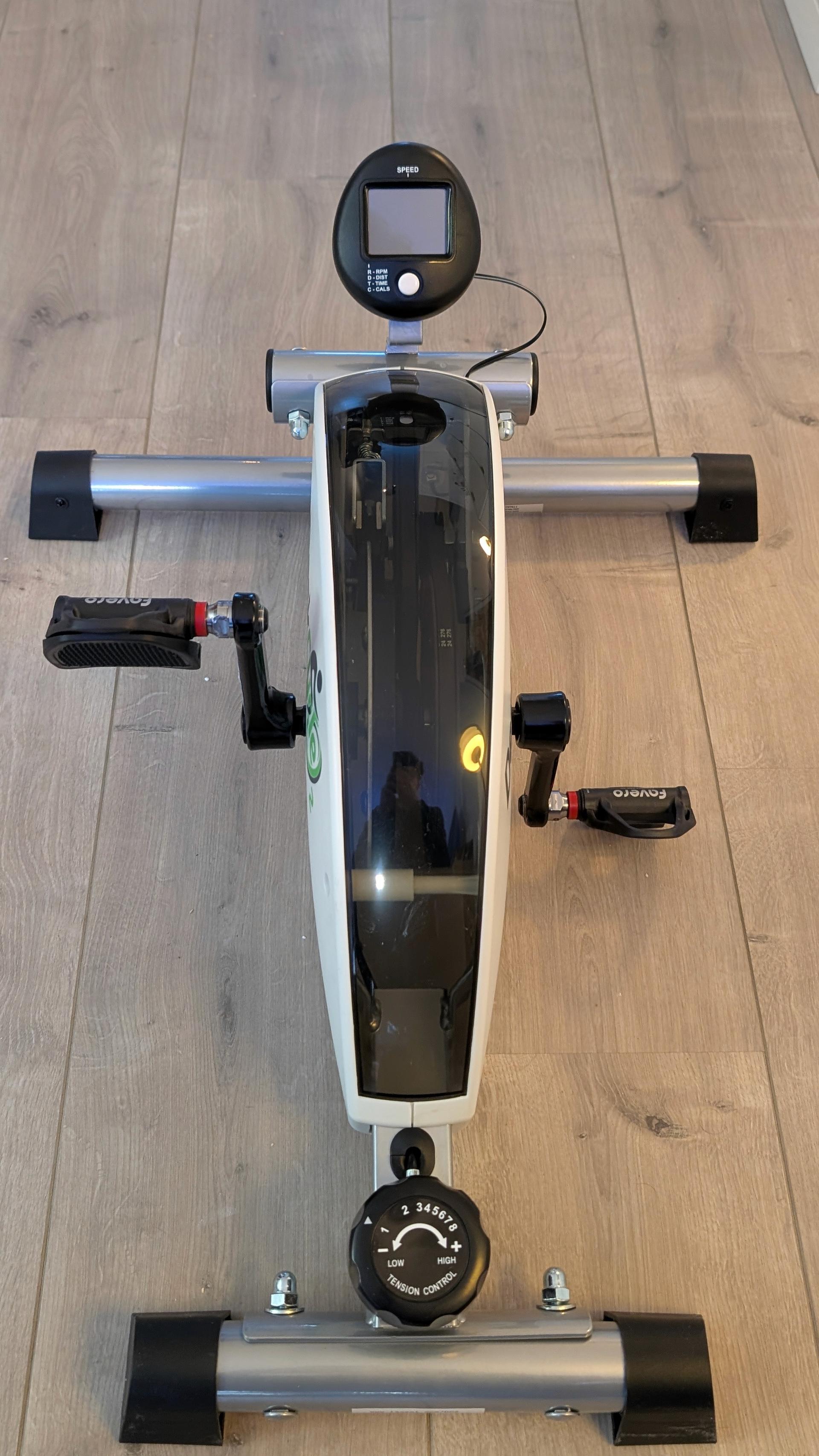
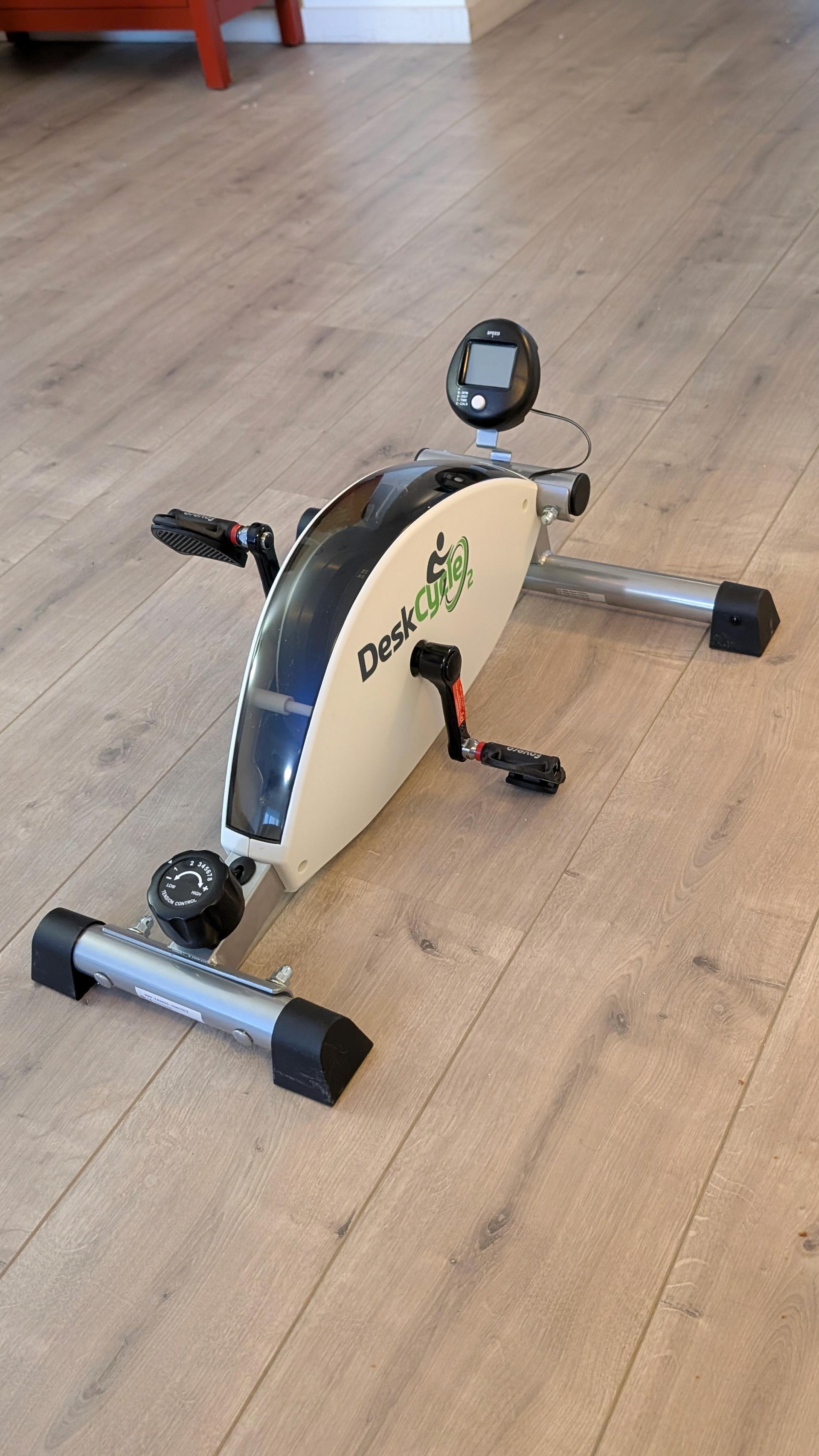
Strengths
- Ultra-quiet — nobody in the room will notice
- Folds away in seconds; fits under any shelf
- Short cranks reduce knee flexion — an advantage if you're recovering from injury
Keep in mind
- Chair rolls backwards while pedalling — needs a workaround
- Built-in display shows guessed numbers, not real data
- Resistance tops out at 100 W — check our wattage chart to see if that's enough for you
Specs
| Spec | Value |
|---|---|
| Max user weight | 136 kg (300 lb) |
| Device weight | 10 kg (23 lb) |
| Dimensions | 26 × 61 × 51 cm (10 × 24 × 20 in) |
Introduction
The DeskCycle 2 is a massively popular, well-reviewed model with high sales volume, but does it hold up to scrutiny? At SitZip, our mission is to help people stay active while they work. While full integrated desk bikes are popular, under-desk units are often the first place people start their journey.
Assembly and build quality
Assembly itself was simple, requiring minimal effort to get up and running. A unique aesthetic feature of this model is the clear casing; you can see the internals and watch the mechanism work through the plastic, which is actually quite cool. It's less of an investment than a full bike, making it an approachable piece of hardware.
Ergonomics and adjustability
While the unit is easy to set up, the ergonomics present significant challenges compared to a dedicated stationary deskbike.
First, because this is a pedal-only unit, you must use your own chair. If you use a standard office chair with wheels, you will inevitably be pushed backward while pedaling. You will likely need wheel stoppers or a strap to keep yourself in place.
Not sure what setup you need? Our desk bike finder matches you to the right bike for your workspace — and also lists popular standing desks that pair well with under-desk units like this one.
Furthermore, unless you are quite short, you will still need a standing desk to use this effectively. Under a fixed-height desk, your knees will hit the underside of the table.
Finally, we measured the crank length at only 10 cm (100 mm). Compare this to the standard 170 mm found on a road bike. This results in a very tight, stilted cycling motion that does not allow for full leg extension or optimal muscle utilization.
Performance: real wattage numbers
We equipped the bike with power pedals to measure exactly what it can do. The results showed that this is designed for light movement rather than serious exercise.
Max intensity: even at the highest resistance setting, maintaining 60 rpm only requires 100 watts of power, equivalent to biking at approximately 25 km/h. Better than sitting still, but fit users may find it lacks the resistance needed for a heavier workout.
How we measure the wattage
A desk bike can’t sense how hard you’re working on its own, so we measure the real force going through the pedals. That is how we get accurate power numbers for the DeskCycle 2, rather than relying on a guess.
- 1
Fit Assioma PRO RS power pedals. Strain gauges inside the pedal axle measure the actual torque your legs apply, accurate to roughly ±1% — the gold standard for cycling power.
- 2
Ride every resistance level at fixed cadences. We hold a steady 30 and 60 rpm on each level and log the watts the pedals report — dozens of readings per bike.
- 3
Map each level to real watts. We store the numbers for every resistance setting in the SitZip app. Tell the app which level you’re on and it converts your cadence into accurate wattage, calorie burn, and distance — no guessing.
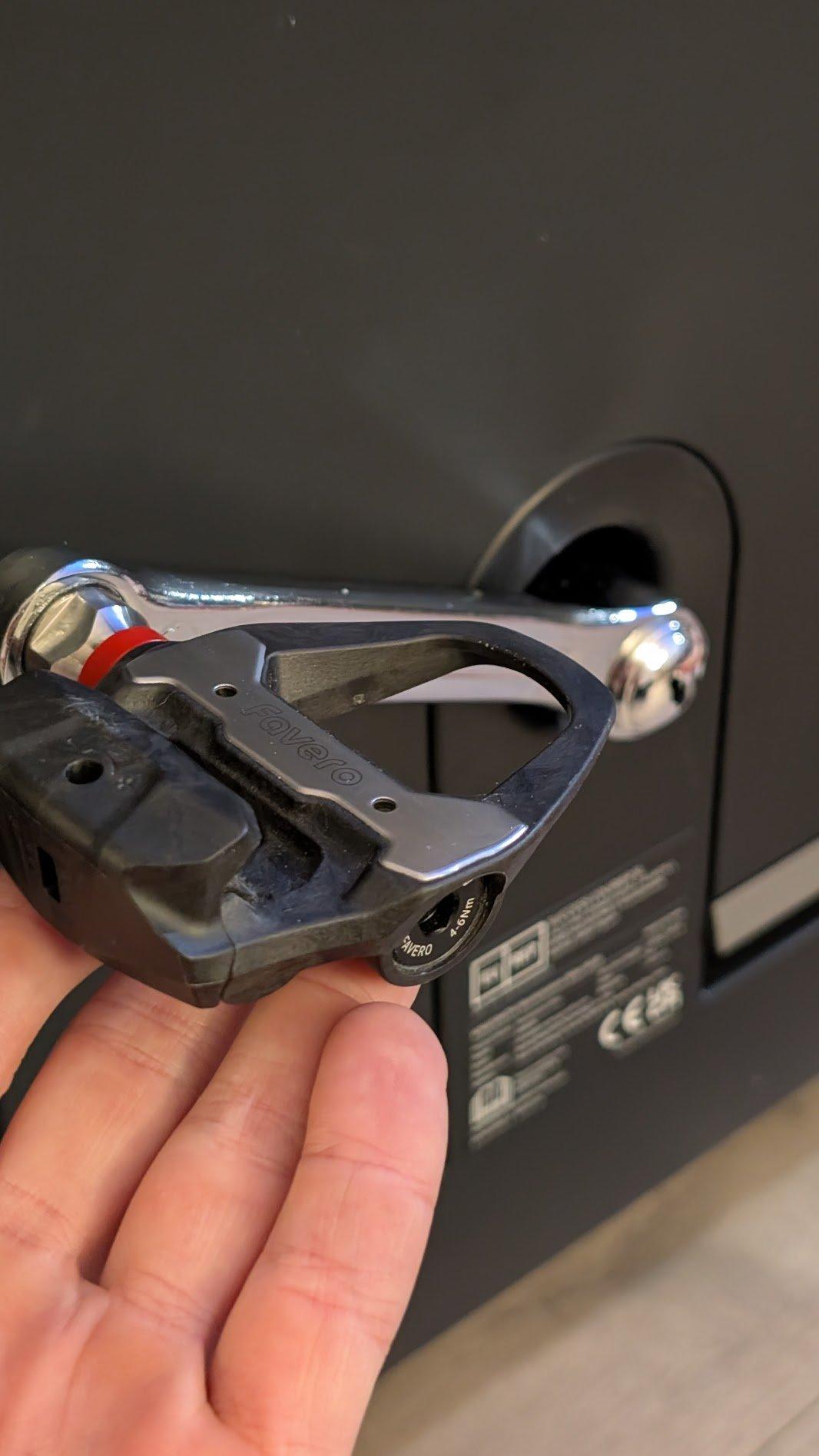
Our Assioma PRO RS pedals and the live power they read at the pedal.
DeskCycle 2 — speed at every resistance level
Stability, noise, and portability
Because the unit is separate from the chair, the unit itself is stable, but your connection to it is not (the rolling-chair issue). The major benefit of this form factor is portability: you can slide it into a closet or under a shelf when done. The noise level is incredibly low, so it works even from the living-room couch while watching a movie.
Tracking your DeskCycle 2 with SitZip
The included display is, frankly, useless. Because the computer is not connected to the resistance knob, it cannot detect which difficulty level you have selected; so the speed, calories, and distance it shows are guesses.
We have manually calibrated the difficulty levels for the DeskCycle 2. Pair the unit with the SitZip app and input the resistance level you are using, and the app calculates real distance, calorie burn, and effort based on our calibration, plus heart-rate monitor support and racing against friends and colleagues.
If you have limited range of motion due to injury, or want to use a desk cycle as part of a rehabilitation program, the short 10 cm crank length is actually a distinct advantage: it allows a complete pedal stroke with significantly less knee flexion than a standard bicycle.
If you want a serious ergonomic workout, look at a full integrated unit like the KingSmith W1B.
Verdict: ⭐️⭐️⭐️ (3/5)
The DeskCycle 2 is affordable and easy to hide away; but the 10 cm crank length and rolling-chair ergonomics keep it from offering a true cycling experience.
For businesses
Deploy desk bikes across
your entire team
SitZip works with any desk bike. Get a fleet account with a shared admin dashboard, usage reports, and volume pricing.
Get a quote →